News
Project Meeting in Atri, Italy
15-17 March 2024
Project partners met in Atri, Italy, to refine the project’s content framework and review the final version of the website. The team worked collaboratively to develop a comprehensive and well-structured table of contents, defining key topics, sources, and responsibilities. During the meeting, the completed website was presented, featuring interactive tools, educational modules, and project newsletters. Participants evaluated its design, usability, and mobile responsiveness, proposing improvements for the next development phase. The meeting concluded with clear next steps toward finalizing the content and officially launching the project’s online platform.
Project Meeting in Tamsweg, Austria
14 September 2024
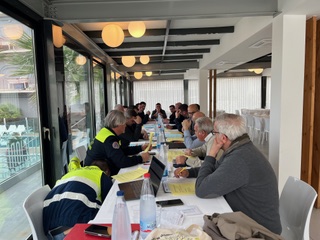
The project partners gathered in Tamsweg, Austria, for a productive meeting focused on reviewing and aligning the content structure developed by each organization. Participants presented their content outlines, discussed similarities and key themes, and agreed on the need for consistent standards across all materials. The newly launched project website (savelife-guide.com) was also showcased, demonstrating its readiness for public access with fresh, engaging content and an intuitive user interface. The meeting concluded on a positive note, reinforcing collaboration among partners and setting clear next steps for content standardization, continuous website updates, and communication of future project developments.
Train the Trainers, Italy April 2025
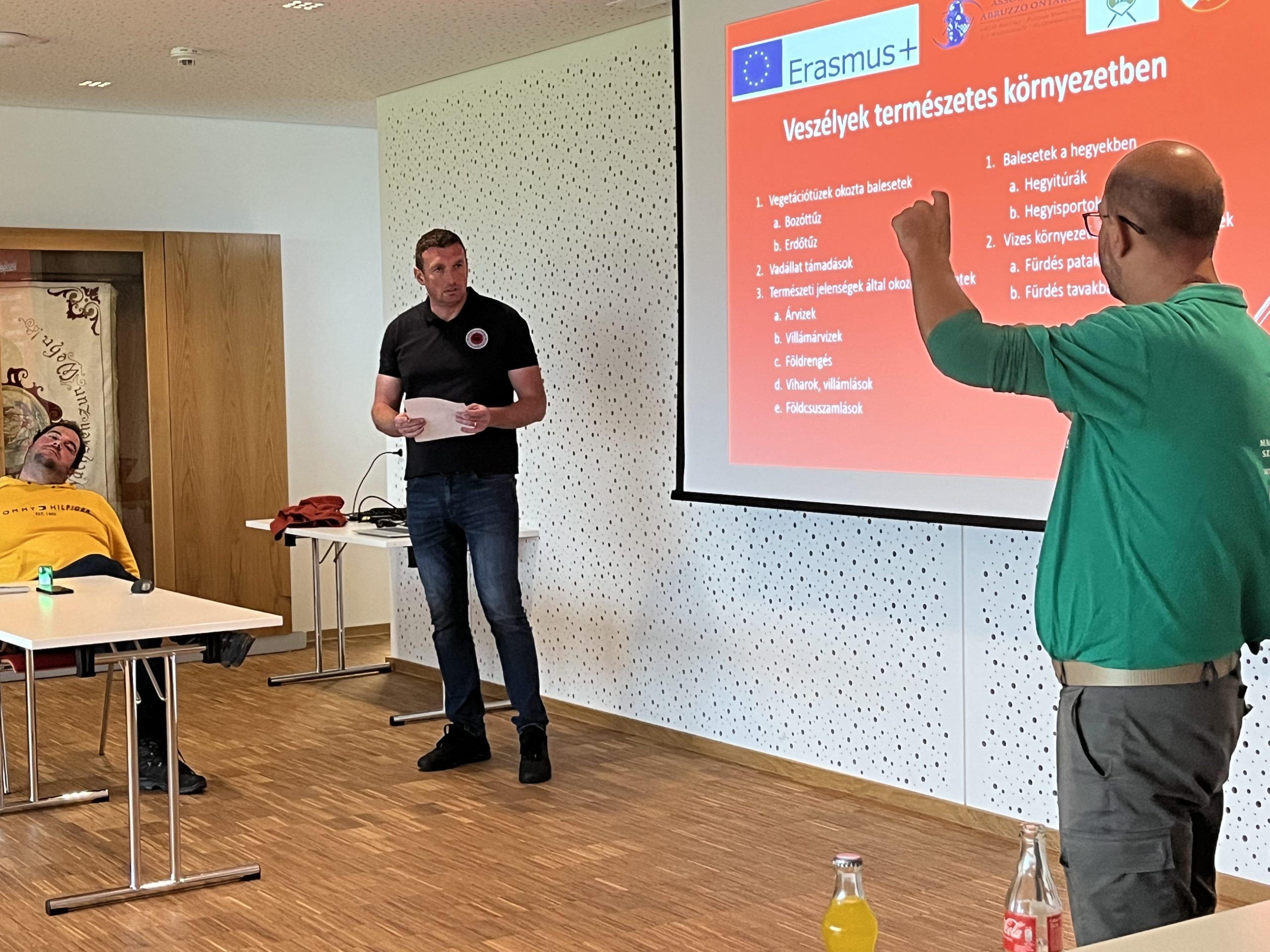
We are proud to highlight the contribution of our Italian partner, Associazione Abruzzo Ontario, in the SaveLife! Erasmus+ project during the “Train the Trainers” event.
This important phase of the project focuses on preparing future trainers to effectively teach life-saving skills to young people. Through hands-on sessions, simulations, and practical demonstrations, participants gained the knowledge and confidence to respond to emergency situations, including first aid, defibrillator use, and crisis management.
The Italian team, supported by the Alpini Civil Protection of Atri, demonstrated excellent commitment by combining theory with real-life practice. Volunteers and future trainers worked closely together, testing teaching methods and engaging with young learners to promote awareness, responsibility, and safety.
A truly inspiring step towards building a more prepared and resilient community!
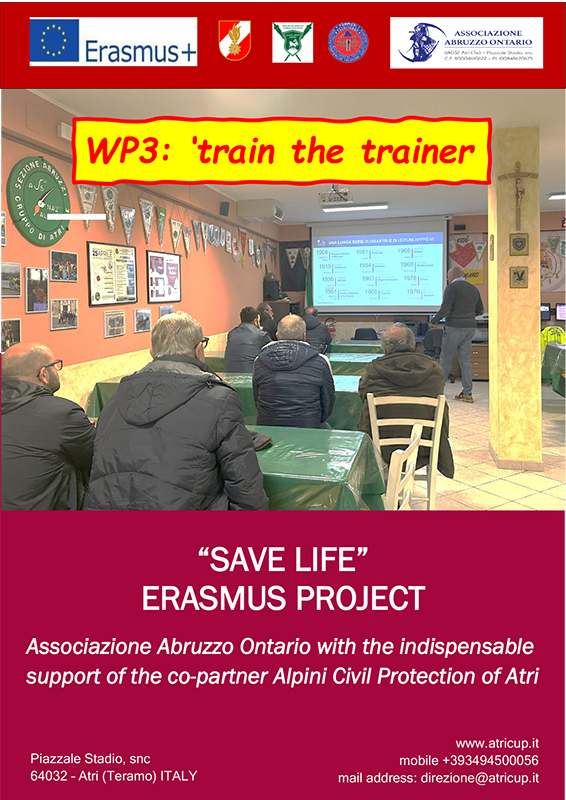
Project meeting in Sovata, Romania
12–14 May 2025
During the transnational project meeting held in Sovata, Romania (12–14 May 2025), partners of the SaveLife! project presented the ongoing progress and key developments of the initiative. SaveLife! aims to raise awareness of healthy lifestyles and enhance the soft skills of young people, with a particular focus on marginalised groups, through civil protection and survival skills training.
The presentation highlighted the project’s core objectives, including strengthening the employability of young people, promoting inclusion, improving the quality and recognition of youth work, and increasing preparedness for disaster prevention and response. The meeting also provided an opportunity for partners from Hungary, Austria, Italy, and Romania to review progress, discuss milestones, and coordinate upcoming activities within the project’s implementation phase.
The consortium continues to work collaboratively towards delivering innovative training methodologies and supporting young people across Europe in developing essential life and emergency response skills.
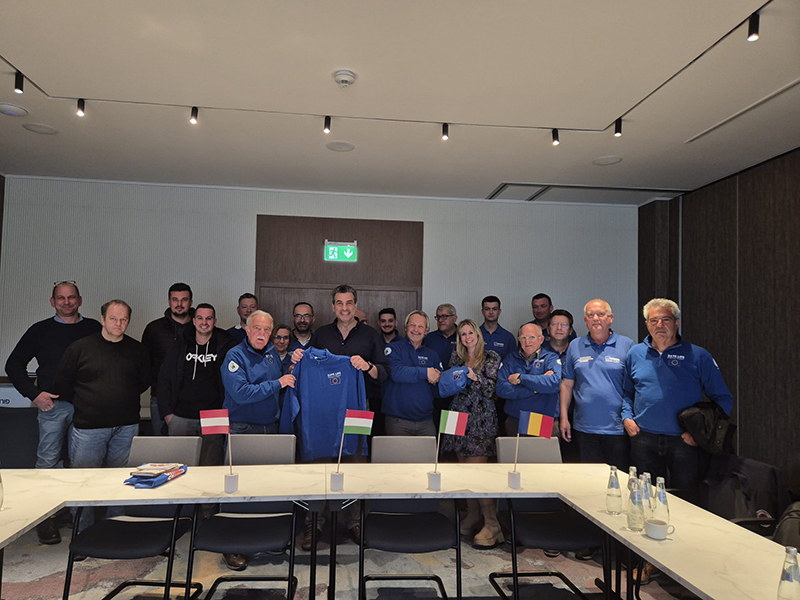
Train the Trainers, Austria
October 2025
As part of the SaveLife! Erasmus+ project, our Austrian partner hosted a successful “Train the Trainers” event on 11 October 2025 in Tamsweg, Austria. The training brought together instructors and participants for a comprehensive day of theoretical learning and practical application, aimed at strengthening the capacity of future trainers to deliver life-saving education.
The morning sessions focused on key emergency scenarios, including household incidents, transport-related risks, emergencies in nature, and safety at mass events. These presentations provided participants with a solid foundation and structured approach to understanding different types of risks and appropriate responses.
In the afternoon, the training shifted to hands-on practice at the Tamsweg fire station, where participants took part in four different practical exercises supported by the local fire department. Working alongside children, the trainers tested their ability to assess emergency situations, collaborate effectively, and identify appropriate solutions in real time.
The event highlighted the importance of combining theoretical knowledge with practical experience, ensuring that trainers are well-prepared to engage young people and deliver impactful safety education in the next phases of the project.
This initiative represents another important step towards empowering communities with the knowledge, skills, and confidence needed to respond to emergencies and promote a culture of safety across Europe.
View photos from the meeting
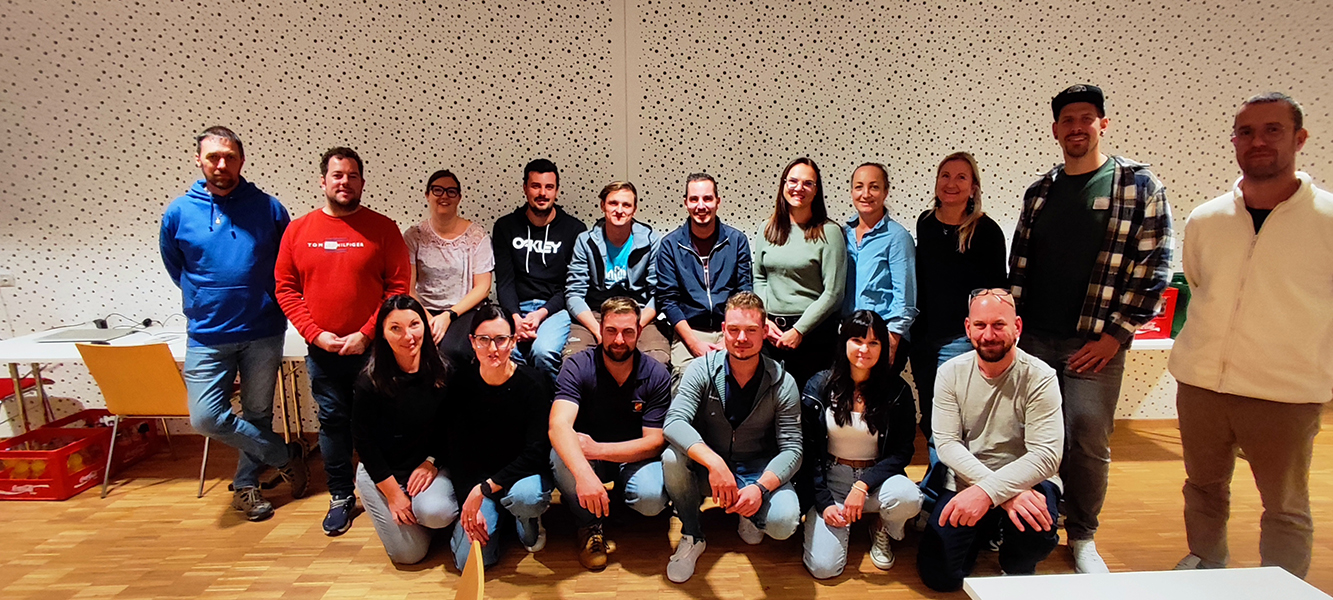
Train the Trainers Hungary
17 October 2025
Over three intensive days in Hungary, participants in the SaveLife! Train the Trainers Event explored a wide range of safety topics, from household and natural hazards to emergency response, evacuation planning, and first aid. The programme concluded with hands-on teaching practice, helping future trainers prepare to share life-saving knowledge and skills with young people across Europe.
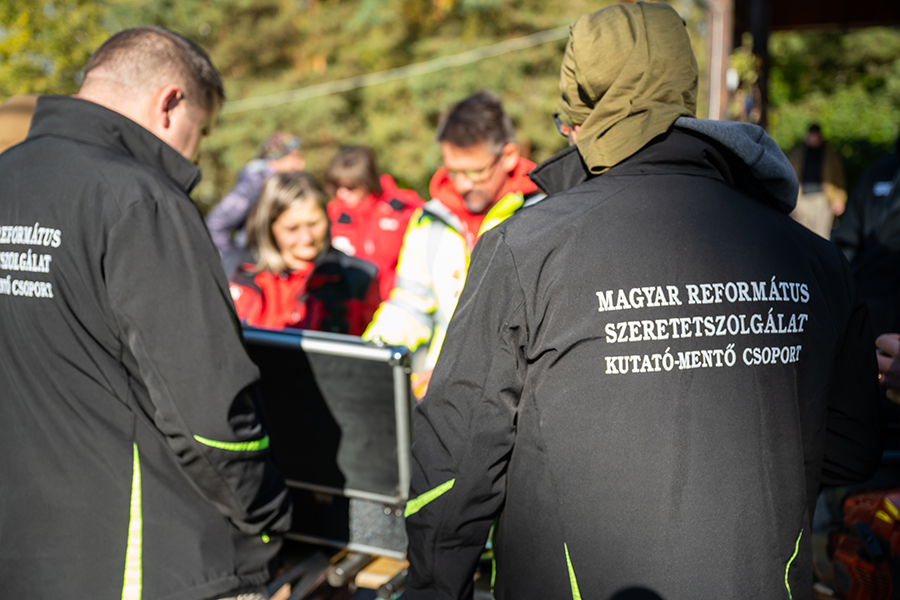
Train the Trainers, Romania
November 2025
As part of the SaveLife! Erasmus+ project, the Romanian partner organised a “Train the Trainers” event on 7 November 2025 in Odorheiu Secuiesc, bringing together 21 participants committed to improving safety education and emergency preparedness.
The training began with an introduction to the project and its objectives, followed by a series of presentations delivered by experienced trainers. These sessions covered key topics from the SaveLife! programme, focusing on risk awareness, prevention, and response to emergency situations in everyday life.
The learning content, based on the SaveLife! handbook, addressed a wide range of real-life risks, including household hazards, transport accidents, natural environment dangers, and first aid response. The aim was to equip future trainers with both the knowledge and the pedagogical tools needed to educate young people effectively.
The event also included a practical first aid training session, allowing participants to apply their knowledge and build confidence in handling emergency situations. Following a Q&A session, 12 trainers were selected to take part in the next phase of the project and deliver training sessions within their communities.
This event represents a significant step in building a network of skilled trainers across Europe, contributing to safer, more resilient communities through education, awareness, and practical preparedness.
Train the Youth, Austria
April 2026
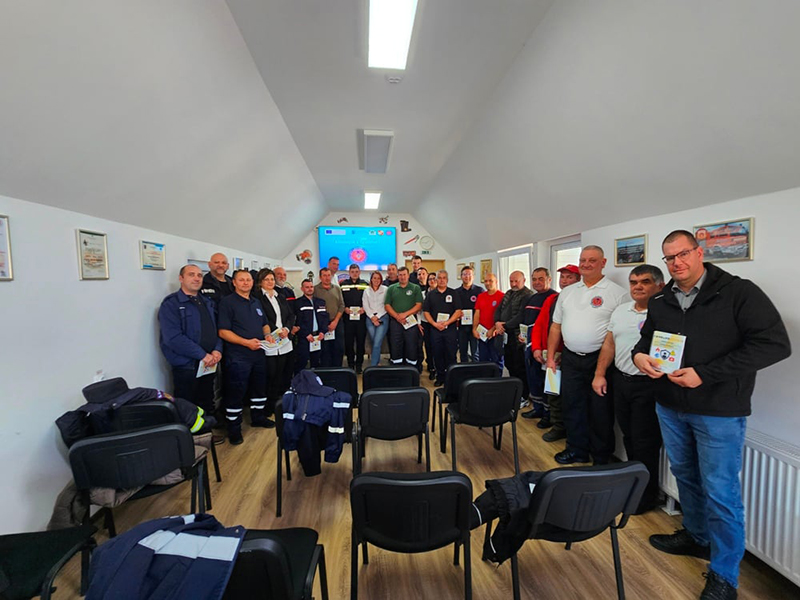
The SaveLife! project successfully delivered its first “Train the Youth” activity in Tamsweg, Austria, hosted by the Volunteer Fire Brigade on 21 April 2026.
The training brought together 32 young participants from urban, rural, and regional backgrounds, providing a valuable opportunity for exchange and learning across different environments. The sessions focused on increasing awareness of everyday risks and strengthening the ability of young people to respond effectively in emergency situations.
Experienced trainers delivered practical, scenario-based presentations covering topics such as road safety, environmental hazards, household risks, and safety at public events. The training approach combined real-life case studies with interactive discussions, ensuring a highly engaging learning experience.
An innovative feature of the event was the use of QR code-based questionnaires before and after each session, enabling real-time assessment of knowledge development and participant engagement.
The strong participation, high level of interest, and extended discussions at the end of the event highlighted the relevance and impact of the SaveLife! methodology. This first training marks an important milestone in the project’s aim to equip young people—particularly those from diverse and marginalised backgrounds—with essential civil protection, survival, and soft skills.
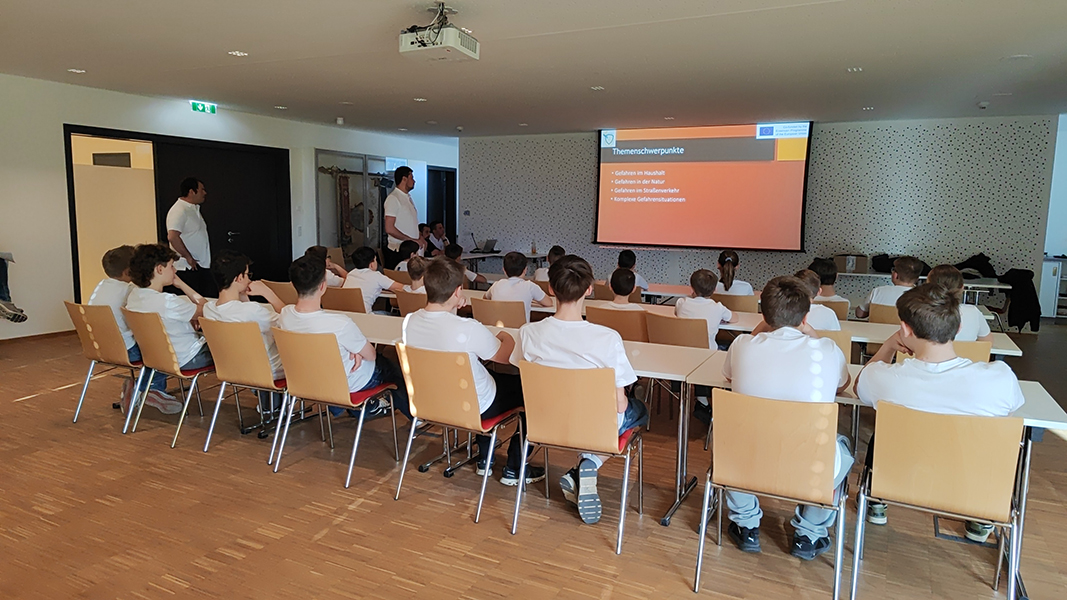
Project Meeting in Debrecen,
Hungary
8 May 2026
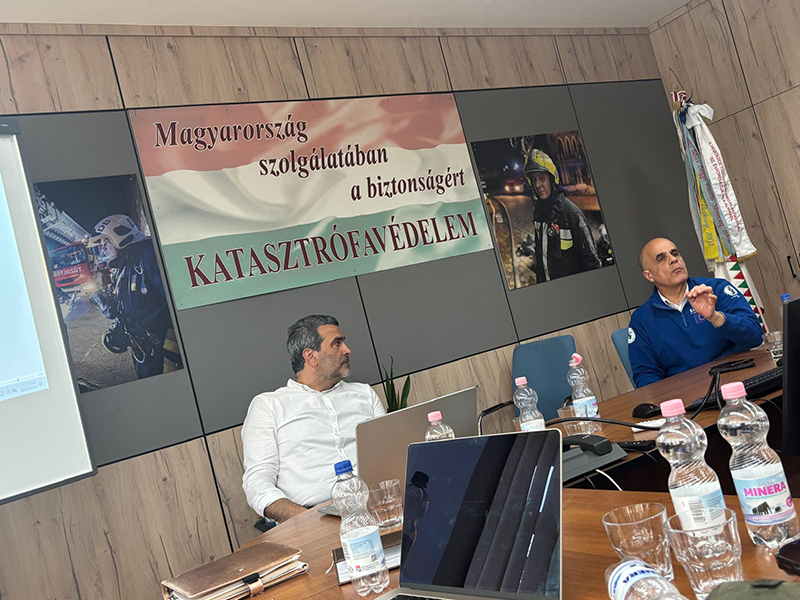
Debrecen city hall visit
As part of its dissemination and outreach activities, the SaveLife! partnership was invited to Debrecen City Hall for a high-level meeting with local authorities.
The full project consortium, led by the Hungarian partner MRSZ, met with Vice Mayor Diana Széles and representatives of the municipality. During the meeting, the partnership presented the objectives, progress, and expected impact of the SaveLife! project, which focuses on equipping young people—especially those from marginalised backgrounds—with essential civil protection, survival, and soft skills.
The discussion provided an opportunity to answer questions from city officials, highlight the relevance of the project at local and European level, and explore connections with community initiatives. The event contributed significantly to raising awareness of the project and strengthening its visibility among key stakeholders.
The visit also received media attention, with the local television station attending the meeting. Several project representatives gave interviews, further promoting the project’s aims and achievements to a wider audience.
This important dissemination activity demonstrates the strong support for SaveLife! at local level and reinforces the project’s commitment to engaging with communities and decision-makers.
Train the Youth Italy,
13 May 2026
Youth Training Event Empowers Italian Students with Essential Safety Skills
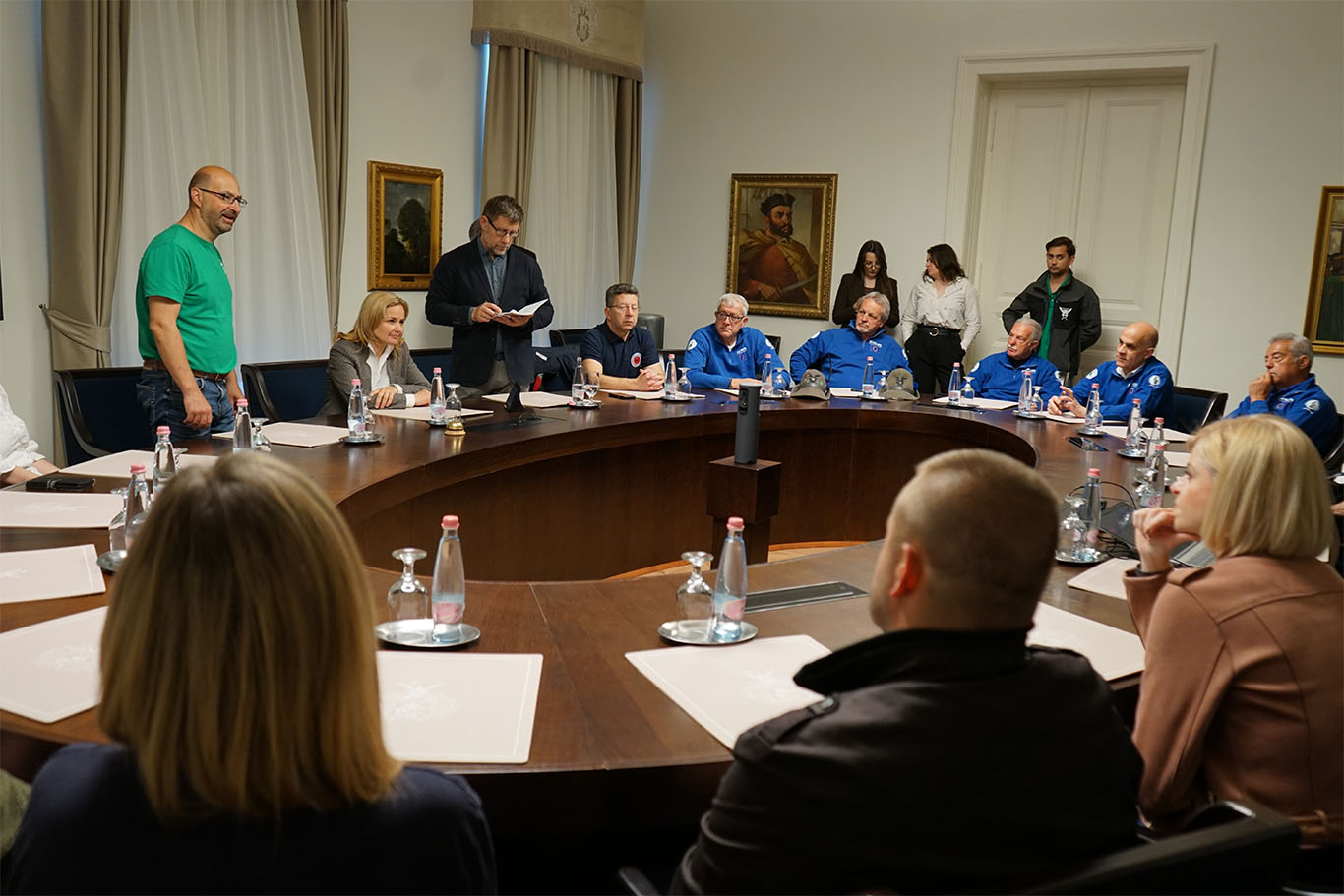
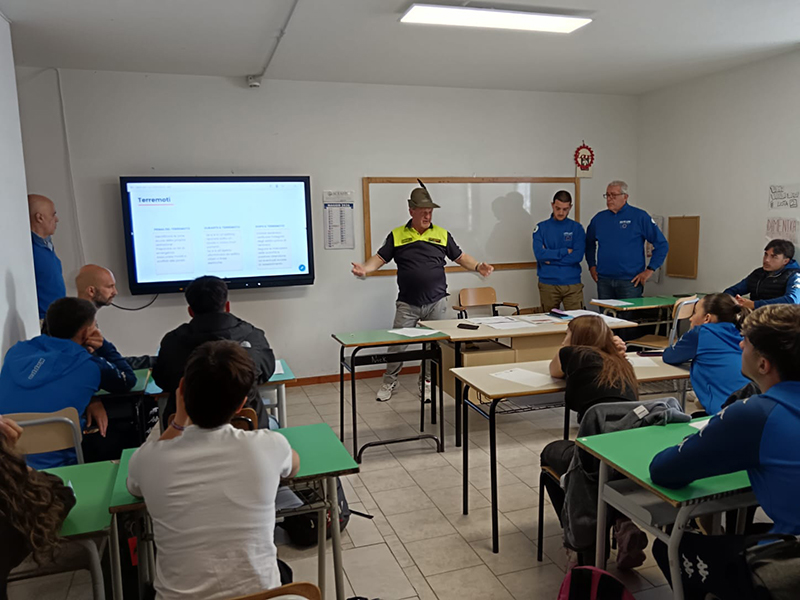
On 13 May 2026, the Erasmus+ “SaveLife!” Youth Training Event took place at IIS A. Zoli High School in Italy, bringing together 29 young participants for an engaging learning experience focused on safety awareness and emergency preparedness. The training was organised by the ANA Civil Protection Volunteers (Abruzzo Section, Atri Group) in cooperation with the Abruzzo Ontario Association.
The event aimed to equip young people with the knowledge and skills needed to identify risks in everyday life, understand emergency response procedures, and react appropriately in challenging situations. Throughout the training, participants explored four key areas: hazards in complex environments, household risks, dangers in natural settings, and road traffic safety.
Using interactive presentations enriched with images, real-life case studies, and practical examples from the local area, the trainers encouraged active participation and discussion. To measure learning outcomes, participants completed questionnaires before and after each session, allowing trainers to assess existing knowledge, address uncertainties, and demonstrate the significant progress achieved throughout the day.
A particularly successful aspect of the programme was its innovative and youth-friendly approach. The use of public speaking techniques, visual learning materials, and smartphone-based questionnaires helped maintain high levels of engagement and created an enjoyable learning environment. Participants were able to connect theoretical concepts with real-world situations, making the training both relevant and memorable.
The event highlighted the importance of practical, interactive safety education in helping young people better understand everyday risks and develop responsible behaviours. By combining expert knowledge, local experience, and modern educational methods, the SaveLife! project continues to empower young people across Europe with life-saving awareness and skills that contribute to safer and more resilient communities.
Train the Youth Hungary,
16 June 2026
Bringing Life-Saving Skills to Young People Across Hungary
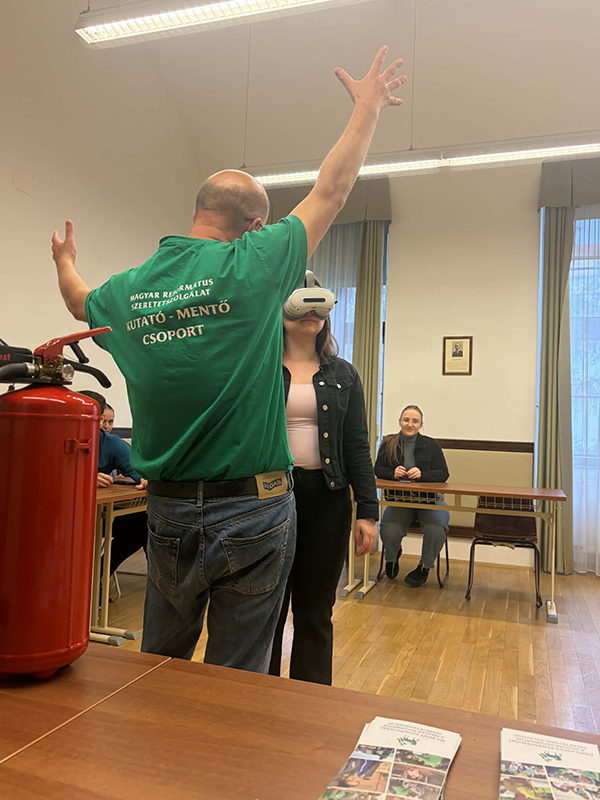
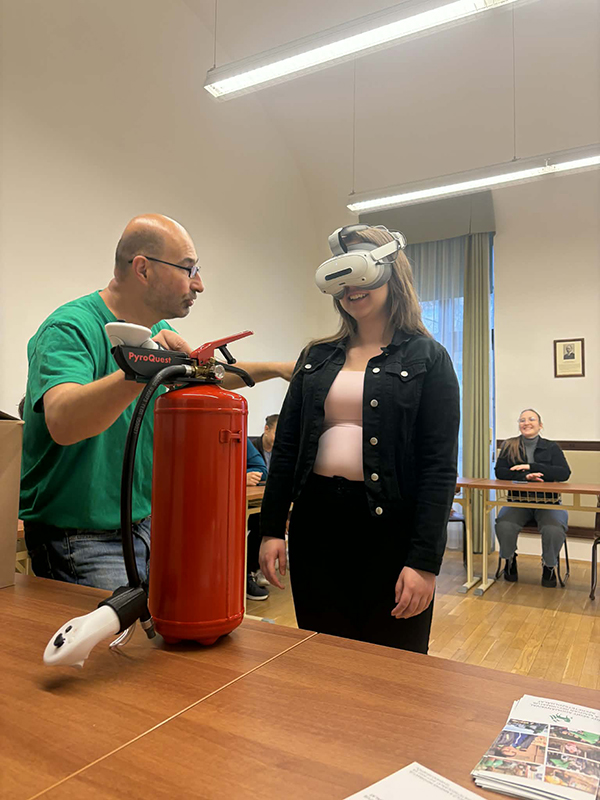
As part of the Erasmus+ “Save Life!” project, a series of youth training activities was delivered in partnership with the Hungarian Reformed Church Aid and its Search and Rescue Team, reaching young people aged 13–14 in both urban and disadvantaged rural communities across Hungary. The programme aimed to strengthen safety awareness, emergency preparedness, and first-aid skills through practical, engaging learning experiences.
The training combined interactive workshops, first-aid demonstrations, and innovative virtual reality (VR) simulations that allowed participants to practise responding to emergency situations in a safe environment. Young people learned how to identify everyday hazards, react to fires, provide basic first aid, contact emergency services, and make responsible decisions under pressure.
A highlight of the programme was the use of VR rescue scenarios and firefighting simulations, which encouraged active participation and teamwork while building confidence and practical problem-solving skills. Participants also practised essential first-aid techniques, including the recovery position, CPR basics, choking response, and effective communication with emergency services.
By combining technology, hands-on learning, and real-life safety scenarios, the Save Life! project continues to empower young people with the knowledge and skills needed to protect themselves, support others, and contribute to safer and more resilient communities.
Train the Youth Romania,
16 June 2026
Train the Youths Learn Life-Saving Skills in Romania
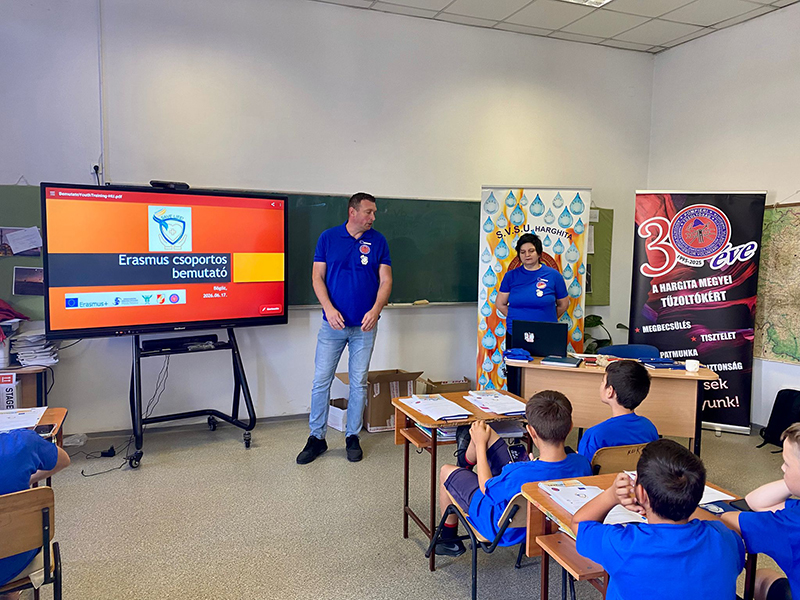
On 16 June 2026, the “Train the Youths” educational seminar was successfully delivered in Mugeni Municipality, Harghita County, Romania as part of the Erasmus+ « SaveLife! » project. The activity brought together 34 young participants from local rural communities, providing them with essential knowledge and practical skills to improve their safety awareness, emergency preparedness, and ability to respond effectively in dangerous situations.
Throughout the training, participants explored a variety of topics, including household safety, road and transport hazards, environmental risks, and basic first aid. Through interactive workshops and hands-on exercises, they learned how to react in emergencies, safely contact emergency services, prevent accidents, and assist others while protecting their own safety.
The programme also included practical demonstrations on accident scene safety, survival techniques in natural environments, and essential first-aid procedures such as placing an unconscious person in the recovery position and controlling external bleeding. These activities helped young participants build confidence, responsibility, and civil courage in emergency situations.
The event concluded with a positive evaluation session, during which all 34 participants demonstrated a strong understanding of the topics covered. The training represents another important step towards the SaveLife! project’s goal of creating safer, more resilient rural communities by empowering young people with life-saving knowledge and skills.